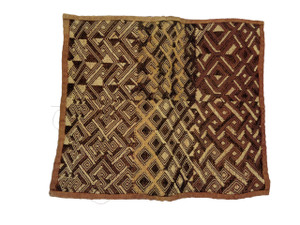
Inkuna Textile -- Brown/Blue/Raspberry
$2,475.00
Open Monday - Friday 10:00am - 5:00pm
Saturday By Appointment

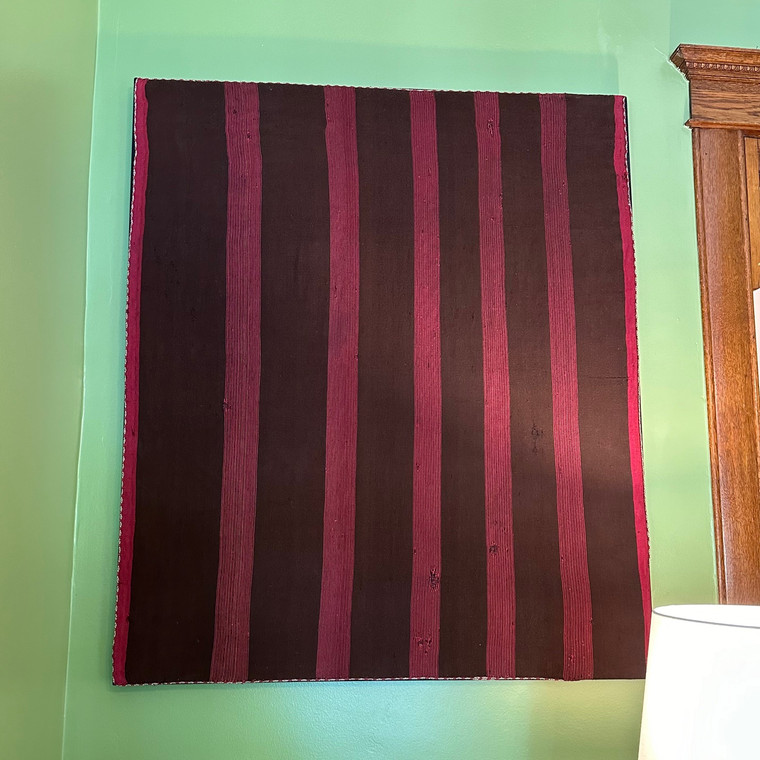
Acquire a masterpiece of Andean textile art with this extraordinary 19th Century Llacata Textile on Canvas. This museum-quality piece features a rich brown ground adorned with striking raspberry-colored stripes, woven from camelid fiber using traditional techniques and natural dyes. The llacata (also spelled llijlla or lliclla) represents one of the most important textile forms in Andean culture, traditionally worn as a shawl or mantle by indigenous women throughout the highlands of Peru and Bolivia.
Why You'll Love It:
Product Details:
Historical & Cultural Context:
The llacata is one of the most significant textile forms in Andean culture, with weaving traditions dating back thousands of years to pre-Columbian civilizations. These rectangular mantles were worn draped over the shoulders and fastened with a tupu (pin), serving both functional and ceremonial purposes. The weaving of llacatas represented not only practical skill but also cultural identity, with specific patterns, colors, and techniques identifying the wearer's community and status.
This 19th century example showcases the sophisticated use of natural dyes derived from plants, minerals, and insects native to the Andean highlands. The rich brown ground likely comes from natural camelid fiber colors or dyes from walnut hulls or other plant materials, while the vibrant raspberry tones may derive from cochineal insects or native plant sources. The bold vertical stripe pattern demonstrates the weaver's mastery of color placement and rhythm.
Textile Techniques:
Perfect Placement:
Perfect For:
Shipping & Delivery:
Shipping and delivery are not included in the purchase price. Please contact us at (505) 983-3912 or info@vrinteriors.com to arrange shipping and delivery after placing your order online. You may also reach out prior to purchase for a shipping quote.
From V&R Interiors & The Store of Santa Fe, New Mexico
The Special | The Useful | The Handy | The Beautiful